
We often talk about making better choices for the planet, our health, and the people around us.
But there’s one simple decision that checks all those boxes, and it starts right in your neighborhood. Supporting local businesses, visiting farmers markets, and subscribing to community-supported agriculture (CSA) programs aren’t just nice weekend activities.
They’re powerful steps toward building stronger, more connected, and more sustainable communities.
Let’s take a closer look at how these small, intentional choices can have big impacts.
The Power of Shopping Local
Ever noticed how a neighborhood coffee shop feels different from a chain store? Local businesses carry a certain energy, something more human, more personal. That’s because they are human.
They’re run by your neighbors, the people who live down the street, send their kids to the same schools, and care deeply about the place they call home.
When you choose to shop at a locally owned store instead of a national chain, more of your money stays within the community. Studies show that for every ₹100 spent at a local business, nearly ₹68 stays in the local economy, compared to only ₹43 when spent at a chain. That money helps pay local employees, support schools, fund infrastructure, and create a vibrant local culture.
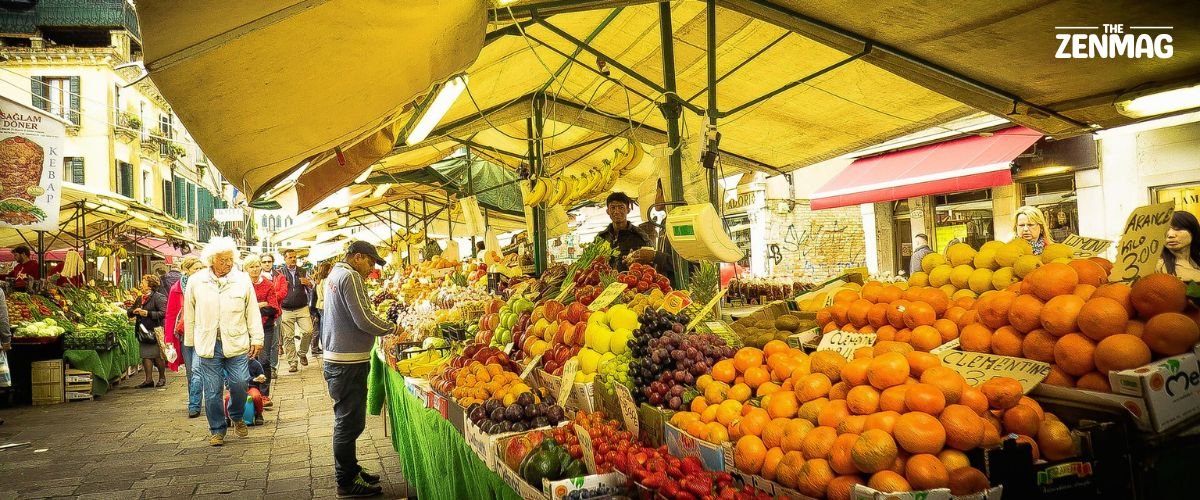
Farmers Markets: Fresh Food and Real Conversations
Something is grounding about walking through a farmer’s market.
You can actually meet the people who grow your food. You can ask questions about how the vegetables were grown, what the chickens were fed, or when the honey was harvested. This kind of transparency is rare in a supermarket aisle.
Buying local produce supports environmentally conscious farming practices and dramatically reduces your food’s carbon footprint. Think about it: Instead of traveling thousands of kilometers in refrigerated trucks, the food is grown just a few hours away. Less transport means less pollution, fresher produce, and a smaller carbon impact.
And the benefits aren’t just environmental. Eating with the seasons, something naturally encouraged by shopping at farmers markets, has been linked to better nutrition and a deeper connection to the cycles of nature.
The CSA Experience: More Than Just a Veggie Box
Community Supported Agriculture (CSA) programs are like a subscription box for fresh, local food. You pay a farmer directly, usually in advance, and in return, you receive a weekly or bi-weekly supply of freshly harvested produce, dairy, eggs, or even bread.
It’s a win-win. Farmers get a stable income and upfront support for their growing season. You get the freshest food possible, often at a lower cost than you’d pay in-store. Plus, it feels like a gift every time that box arrives. You never know exactly what you’ll get, which makes it fun and forces you to try new things, like that oddly shaped squash you’d never pick up otherwise.
CSAs also bring people together. Some offer farm visits, harvest festivals, or community potlucks, helping members reconnect with the land and with one another.
It’s Not Just Food, It’s a Mindset
While farmers’ markets and CSAs are great examples, the idea of buying local goes far beyond food. It includes supporting local artisans, choosing indie bookstores, hiring nearby service providers, and even attending neighborhood events. Every time you choose something made or offered close to home, you’re reinforcing a network of relationships, culture, and resilience.
In an age where everything is available with a tap and delivered by tomorrow, local choices require us to slow down and be more mindful. But they also offer something richer: a sense of place and belonging.
They remind us that we are part of something bigger than just our own routine; we’re part of a community.
Environmental Impact: The Quiet Revolution
Choosing local doesn’t just help people, it helps the planet. When food and goods don’t have to travel far, fewer fossil fuels are burned. Local farmers tend to use more sustainable practices because they’re directly accountable to their customers. Many small-scale farmers rely on compost, crop rotation, and organic pest control, which are healthier for the soil and safer for pollinators.
Even the packaging is different. That heirloom tomato at the farmers market doesn’t come wrapped in three layers of plastic. You’re encouraged to bring your own bags, jars, and containers. Over time, this shift can reduce an enormous amount of waste.
Building Social Connections
There’s another, often overlooked benefit to all of this: real human connection.
When you regularly visit the same butcher, baker, or flower vendor, you build relationships. People learn your name. They ask about your family.
They tell you when the mangoes are at their sweetest. These micro-interactions add up to something powerful: a sense of community.
In a time when many people feel isolated despite being digitally connected, these in-person connections can make a big difference in mental well-being.
They help create a social safety net that no app can replicate.
How to Get Started
If you’re ready to embrace local living, here are some simple ways to begin:
- Visit a farmers’ market this weekend. Even if you only buy one or two things, it’s a great way to start.
- Look for CSA programs near you. Many have flexible subscription options.
- Shop from local makers online. Platforms like Instagram or craft marketplaces feature small businesses close to you.
- Replace one big-brand purchase with a local one. Coffee, skincare, or home decor are easy swaps.
- Talk to the people you buy from. Learn their names, ask about their stories.
These aren’t just lifestyle choices. They’re community-building acts that ripple outward. You’ll feel more rooted, more nourished, and more connected to people and the planet.
Final Thought
Creating a more sustainable world doesn’t always require big gestures. Sometimes, it starts with choosing your neighborhood café over the chain, picking up local honey at the market, or signing up for a CSA box.
These small, intentional acts of local love can spark change that goes far beyond your kitchen table.
Let your next purchase be a seed planted right in the heart of your community.

I am a Mindfulness Teacher, Sound Meditation Facilitator, and a Global Wellness Consultant, based in Mumbai, India.
I help professionals and organizations worldwide integrate Mindfulness, Sound meditation, and Holistic well-being into their culture, enhancing productivity, resilience, and mental wellness. Visit my website at: www.GayatriSingh.com