


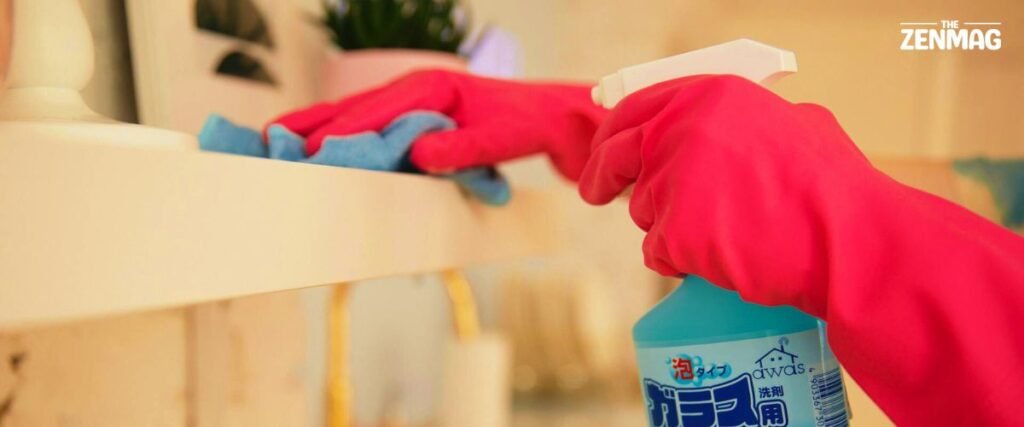
Let’s be honest, cleaning isn’t something most of us look forward to. It’s often lumped with chores, obligations, or weekend to-do lists.
But what if I told you that sweeping the floor or wiping a countertop could be a spiritual practice? That’s the idea behind Samu, a concept rooted in Japanese Zen traditions where cleaning becomes meditation in motion.
If you’ve ever experienced that calm after decluttering a room or the quiet focus while doing the dishes, then you’ve already had a taste of what Samu offers. It’s more than just tidying up; it’s about being present in the act. And in our overstimulated, screen-saturated world, that’s becoming more valuable than ever.
What is Samu?
Samu is a Zen Buddhist practice where one performs physical work, usually cleaning or simple maintenance, with full awareness and intention. It’s not just about keeping the temple clean; it’s about training the mind through action. In Zen monasteries, monks begin their day not with prayer or scripture, but with a broom.
The belief? When the hands are busy, the mind can be still. Samu teaches that every task, no matter how ordinary, holds the potential to wake us up to the present moment.
How Cleaning Transforms into Meditation
Think of the last time you cleaned in silence. No podcast. No music. Just the rhythmic motion of your hands, the subtle sounds of bristles on the floor, or water running over a dish. That’s Samu in action.
When we clean with presence, without multitasking or rushing, we give ourselves the rare chance to just be. There’s a grounding quality to it. It slows the mind, softens the inner chatter, and brings you into your body. It’s surprisingly soothing, almost like a moving mindfulness practice.
The difference between a chore and a meditative act lies in attention. If you’re angry while scrubbing a pot, it’s just scrubbing. But if you bring awareness to the movement, breath, and sound, you begin to shift your inner state.
Benefits of Samu: More Than Just a Clean Home
Adopting Samu as a practice does more than tidy your physical space. Here’s what regular mindful cleaning can do for you:
- Reduces Stress: The repetitive nature of cleaning can calm the nervous system, much like a walking meditation.
- Sharpens Focus: When you pay attention to small, simple tasks, your ability to concentrate improves overall.
- Boosts Mood: A clean environment influences your mental clarity. Add intention to the mix, and it becomes emotionally uplifting.
- Creates Structure: In uncertain or chaotic times, routine tasks like sweeping can bring a sense of order and control.
- Builds Mind-Body Connection: Samu makes you aware of how you move, breathe, and feel in your space, promoting holistic awareness.
My Personal Experience with Samu
I stumbled upon the idea of Samu while researching mindfulness techniques during a particularly anxious period of my life. I was restless, disconnected, and mentally cluttered. Meditation felt intimidating. But I could clean.
So I tried it. I started sweeping my tiny living room floor each morning, not because it was dirty, but because I needed a ritual. I did it slowly, with care. I noticed the swish of the broom, the way the dust gathered, and how my breathing matched the rhythm.
It became my still point in a noisy world.
Over time, this simple act helped me reconnect with myself. It grounded me. I no longer viewed cleaning as an obligation but as a form of self-care. Even now, when my thoughts spiral, I reach for the broom.
How You Can Try Samu at Home
You don’t need to live in a Zen temple to experience the benefits of Samu. All you need is a shift in mindset and a little time. Here’s how to begin:
- Pick a Task: Choose something basic like sweeping, folding laundry, or washing dishes.
- Silence the Noise: No distractions. Turn off the TV, music, or podcast. Let the silence do its work.
- Focus on Sensation: Feel the movement of your hands, notice the textures, and hear the sounds.
- Breathe Intentionally: Sync your breath with the task. Inhale, sweep. Exhale, pause. Let it be rhythmic.
- Let Go of the Outcome: Don’t aim for perfection. The goal is the process, not the polished result.
- Repeat Often: The more you practice, the more natural and meditative it becomes.
Why It Matters Now
In a world that celebrates hustle and constant output, Samu offers a radical shift: slow down, do one thing, and be present. It invites us to find meaning not in grand achievements, but in the small, often overlooked moments.
As mental health issues rise and our attention gets pulled in countless directions, practices like Samu are not just ancient philosophies; they’re modern necessities. They teach us that peace doesn’t always come from sitting cross-legged in silence. Sometimes, it comes with a broom in your hand and clarity in your breath.