


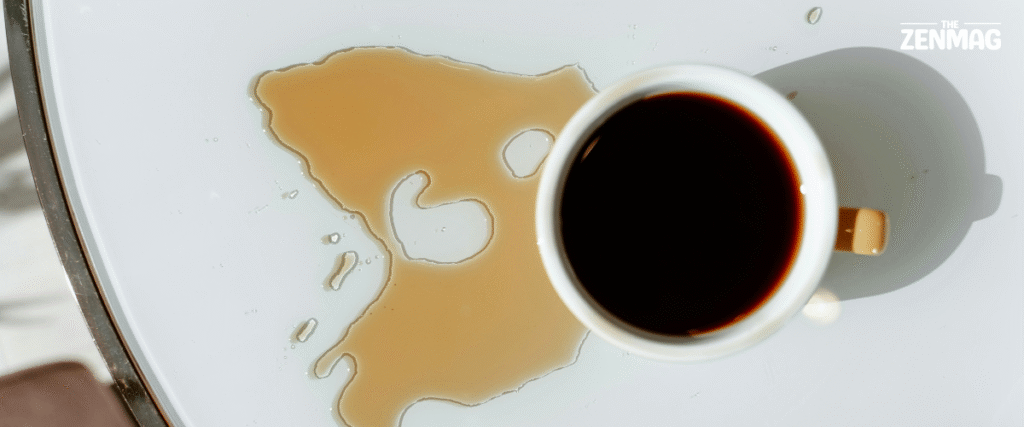
Have you ever loved something not because it was flawless, but because it was real?
A chipped coffee mug that holds your morning ritual. A faded photo of your grandparents. Wrinkles on a familiar smile. These are the quiet, imperfect details that tell stories, and they’re exactly what Wabi-Sabi celebrates.
In a world obsessed with filters, perfection, and constant upgrades, the Japanese concept of Wabi-Sabi offers a refreshing perspective. It invites us to slow down, accept the messiness of life, and find beauty not in what’s new or perfect, but in what’s authentic and incomplete.
Let’s explore what Wabi-Sabi means, how it applies to our everyday lives, and why embracing imperfection might just be the key to living more fully.
What Is Wabi-Sabi?
Wabi-Sabi (侘寂) is a Japanese aesthetic and philosophy rooted in Zen Buddhism. Though hard to define directly in English, it’s often translated as “the beauty of imperfection, impermanence, and incompleteness.”
- Wabi originally referred to a kind of rustic simplicity, solitude, or quietness. Over time, it evolved to mean a humble appreciation of nature and modest living.
- Sabi speaks to the passage of time, weathered beauty, aging, and the kind of elegance that comes with use and history.
Together, Wabi-Sabi expresses a worldview that sees beauty not in polished surfaces or symmetry, but in flaws, decay, and the subtle details that come with time and experience.
Why Wabi-Sabi Matters Today
We live in a perfection-driven culture. Glossy social media feeds, productivity hacks, 24/7 comparison. Everything is curated to look ideal: homes, bodies, relationships, careers.
But the pursuit of perfection is exhausting. It’s also unrealistic.
Wabi-Sabi reminds us that nothing lasts, nothing is finished, and nothing is perfect, and that’s okay.
Instead of chasing flawless outcomes, Wabi-Sabi invites us to appreciate things as they are: incomplete, aging, irregular, and real. It’s a much-needed breath of fresh air in a perfection-obsessed world.
The Everyday Beauty of Wabi-Sabi
You don’t need to move to a Japanese tea house or change your lifestyle to experience Wabi-Sabi.
It already exists all around you; you just need to notice it.
1. In Your Home
Wabi-Sabi homes aren’t picture-perfect. They have cracks, mismatched items, and evidence of life being lived. A wooden table with scuffs. A handmade bowl with uneven edges. A wall that’s faded from sunlight.
Instead of hiding these imperfections, Wabi-Sabi embraces them as signs of time, use, and uniqueness.
Try this: bring in more natural textures, muted colors, and handmade items. Let go of the pressure to keep everything pristine. A home should feel lived in, not staged.
2. In Your Work
Not every project will be a masterpiece. Not every decision will be right. That’s normal.
Wabi-Sabi at work means embracing process over perfection. It means allowing space for learning, iteration, and growth. The rough draft. The honest email. The “good enough” solution that keeps things moving.
Letting go of the need to do things perfectly can make you more productive and much less stressed.
3. In Your Body and Self-Image
Our bodies carry stories: stretch marks, laugh lines, gray hairs. In a culture that often teaches us to fix or hide these, Wabi-Sabi offers a radical alternative: acceptance.
Instead of fighting the natural changes of your body, try honoring them. They’re proof of time lived, lessons learned, and joy felt.
Wabi-Sabi is self-compassion in its purest form.
4. In Relationships
No relationship is perfect. People are messy, moods shift, and misunderstandings happen.
Wabi-Sabi teaches us to appreciate others and ourselves, for who we are, not who we wish we could be. That includes embracing quirks, forgiving flaws, and valuing connection over control.
It’s about finding peace in the cracks, not trying to fix every one of them.
Wabi-Sabi and Mental Health
Living in constant pursuit of flawlessness can fuel anxiety, burnout, and low self-esteem. Wabi-Sabi offers a counterbalance. It helps you:
- Release unrealistic expectations
- Accept change and uncertainty
- Feel more grounded in the present
- Appreciate what you already have
By focusing on what’s real and meaningful, you give yourself space to breathe.
Wabi-Sabi in Design and Art
Wabi-Sabi also influences Japanese design, architecture, and crafts. You’ll often see:
- Uneven surfaces and raw materials
- Muted tones and earth colors
- Visible repairs and aged textures
- Space and silence as part of the aesthetic
A beautiful example is kintsugi, the art of repairing broken pottery with gold. Instead of hiding the damage, the break is highlighted, turning it into something more beautiful than before.
This idea applies to more than pottery. It’s a metaphor for life: we’re not beautiful despite our scars, but because of them.
How to Practice Wabi-Sabi in Daily Life
You don’t have to fully “master” Wabi-Sabi; it’s more about shifting how you see things. Here are a few simple ways to start:
- Notice the imperfect: Find something flawed today, a weathered door, a wrinkle, a mistake, and admire it.
- Let go of over-editing: Post that photo, write that message, wear the outfit. Don’t wait until it’s flawless.
- Simplify your space: Choose quality over quantity. Keep things that feel real, useful, or beautiful in their own way.
- Create without judgment: Write, paint, build, bake. Do it for the joy, not the perfection.
- Be gentle with yourself: Speak to yourself the way you would to someone you love. Embrace the mess, the mood, the moment.
Final Thoughts
Wabi-Sabi isn’t a trend or aesthetic; it’s a way of seeing. A quiet wisdom that encourages you to love the real over the ideal, to welcome the worn over the new, and to find peace in what is rather than what could be.
There’s deep beauty in the chipped, the fading, and the undone. There’s beauty in you.
Not because you’ve “arrived” or figured it all out, but because you are here, in this moment, imperfect and whole.
And that’s more than enough.