
Have you ever fallen asleep faster just by listening to ocean waves?
You’re not imagining it. There’s actual science behind why the sound of rolling tides, crashing surf, or rhythmic waves can shift your mind into a more relaxed state and guide you gently into sleep.
In today’s world of sleep apps, white noise machines, and playlists claiming to bring instant calm, one timeless sound stands out: ocean waves.
Not only are they soothing, but they also interact with your brain in fascinating ways. It’s more than just “relaxing background noise.” Ocean sounds can reprogram your brainwaves and influence how deeply you sleep.
Let’s explore why this works and how you can use it to improve your sleep, naturally, effortlessly, and without screens.
Brainwaves and Sleep: A Quick Refresher
To understand how nature sounds affect your sleep, you need to know about brainwaves. Your brain produces different types of electrical activity depending on your mental state.
Here’s a breakdown:
- Beta waves (13–30 Hz): Active, alert, problem-solving
- Alpha waves (8–12 Hz): Calm, relaxed, light meditative state
- Theta waves (4–8 Hz): Deep relaxation, daydreaming, early stages of sleep
- Delta waves (0.5–4 Hz): Deep, restorative sleep
To fall asleep and stay asleep, your brain needs to transition from fast-paced beta to slower alpha, then theta, and finally deep delta waves.
That’s where ocean waves come in.
Why Ocean Sounds Work So Well
Ocean sounds are what researchers call non-threatening, rhythmic auditory stimuli. That’s a fancy way of saying they’re predictable, safe, and repetitive. Unlike traffic noise or sudden alerts, your brain doesn’t need to stay “on guard” when it hears ocean sounds.
Here’s what ocean sounds do:
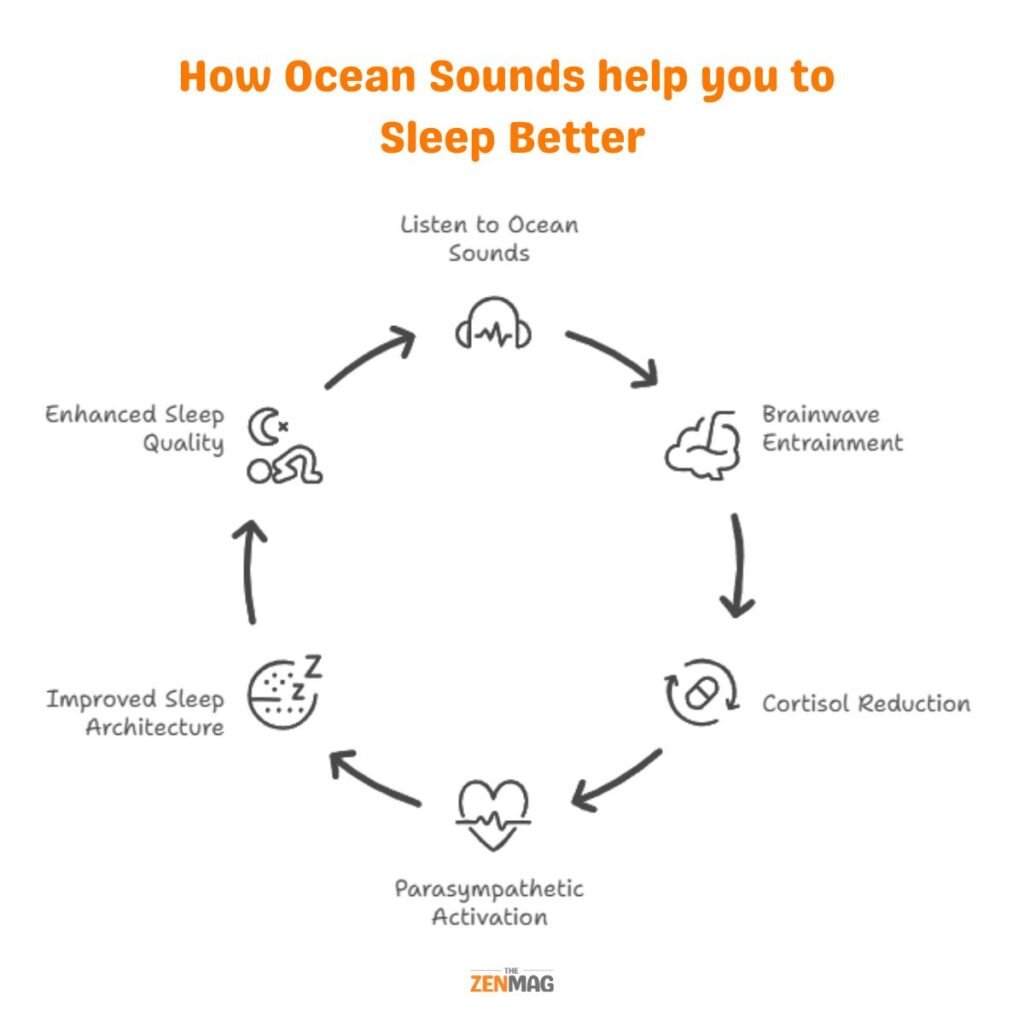
- Encourage Alpha and Theta Brainwave Activity
The steady rhythm of ocean waves mirrors the brain’s alpha-theta state, the sweet spot between wakefulness and sleep. This natural entrainment helps ease your mind into a meditative space, making it easier to drift off. - Lower Cortisol (Stress Hormone) Levels
A study published in Scientific Reports found that nature sounds, including waves, can reduce cortisol and sympathetic nervous system activity. That means less fight-or-flight, and more rest-and-digest. - Mask Background Noise
Ocean sounds act as a natural form of white or pink noise, which helps mask disruptions like a snoring partner or honking traffic. This helps maintain sleep quality by preventing micro-awakenings. - Stimulate the Parasympathetic Nervous System
Your parasympathetic system controls rest and recovery. The sound of waves can activate this mode, slowing your heart rate, deepening your breath, and relaxing your muscles, all essential for sleep.
Sleep Architecture and Nature Sounds
Your sleep isn’t just one long nap; it’s made up of cycles, usually 90 minutes each, with light, deep, and REM stages. Together, they make up your sleep architecture.
Research shows that natural sounds like ocean waves can:
- Shorten sleep onset time (the time it takes to fall asleep)
- Prolong slow-wave sleep (the deep sleep phase where healing and memory consolidation occur)
- Reduce night-time awakenings, helping you stay in restorative stages longer
In short, ocean wave sound therapy helps support better sleep structure, not just sleep quantity.
How to Use Ocean Sounds for Better Sleep
You don’t need an ocean outside your window. Here’s how to bring the calming power of waves into your bedtime routine.
1. Choose the Right Sound Quality
Look for recordings with real ocean wave sounds, not synthetic versions. Some people prefer soft shoreline lapping, others like crashing surf. Test a few to see what your brain responds to.
2. Use a Sleep Timer
You don’t have to listen all night. Try setting a 60-minute timer. Once your brain enters deep sleep, it may not need continued sound stimulation.
3. Combine with Breathwork
Inhale slowly as a wave rolls in, exhale as it recedes. This breath-wave syncing can calm your nervous system and create a meditative loop.
4. Make It a Ritual
Pair the sound with other sleep cues: dim lights, a warm shower, or herbal tea. Over time, your brain will associate ocean waves with winding down.
Ocean Waves vs. White Noise: What’s the Difference?
White noise (like a fan or static) is flat and uniform. It works well to mask noise but doesn’t have the natural rhythm or restorative cues that ocean waves offer.
Ocean waves offer a dynamic, organic pattern; your brain detects this and responds with soothing neurological changes that help lower stress and improve sleep.
It’s nature doing what it does best, bringing balance without effort.
Real Talk: What If It Doesn’t Work for Me?
Everyone’s brain is different. If ocean waves don’t work for you, try rainfall, gentle streams, or forest sounds. The key is to find a natural rhythm that your brain can sync with.
But for many people, ocean sounds are the gold standard in nature-based sleep aids. They’re timeless, free of stimulation, and deeply calming, making them ideal for rewiring an overstimulated mind.
Sleep Is Not a Luxury, It’s a Daily Reset
We often chase productivity by cutting back on sleep, but poor sleep is linked to everything from anxiety and poor digestion to weakened immunity and foggy thinking.
Nature’s sounds, especially ocean waves, offer a low-effort, high-impact way to reclaim your rest, without pills, screens, or gimmicks.
So tonight, instead of scrolling or stressing, close your eyes, press play, and let the waves carry you home.